MUNTERS
Mapping Complexity
A master’s thesis research project uncovering how information breaks down across multiple stakeholders in complex B2B service environments, and what designers can do differently to navigate it.
THE CHALLENGE
A black box of complexity, before a single screen is designed
Munters manufactures complex industrial climate control machines deployed in pharmaceutical factories, food production, and battery plants. When a new machine is installed, a commissioning process involving service technicians, service planners, sales engineers, and customers must all coordinate across different countries, tools, and communication channels. Almost nothing was documented. Nothing was designed.
Research Question
"What are the communication breakdowns between stakeholders, and what must a designer do differently to navigate a space this complex?"
DEISGN PROCESS
Going into the field to see what no one had mapped
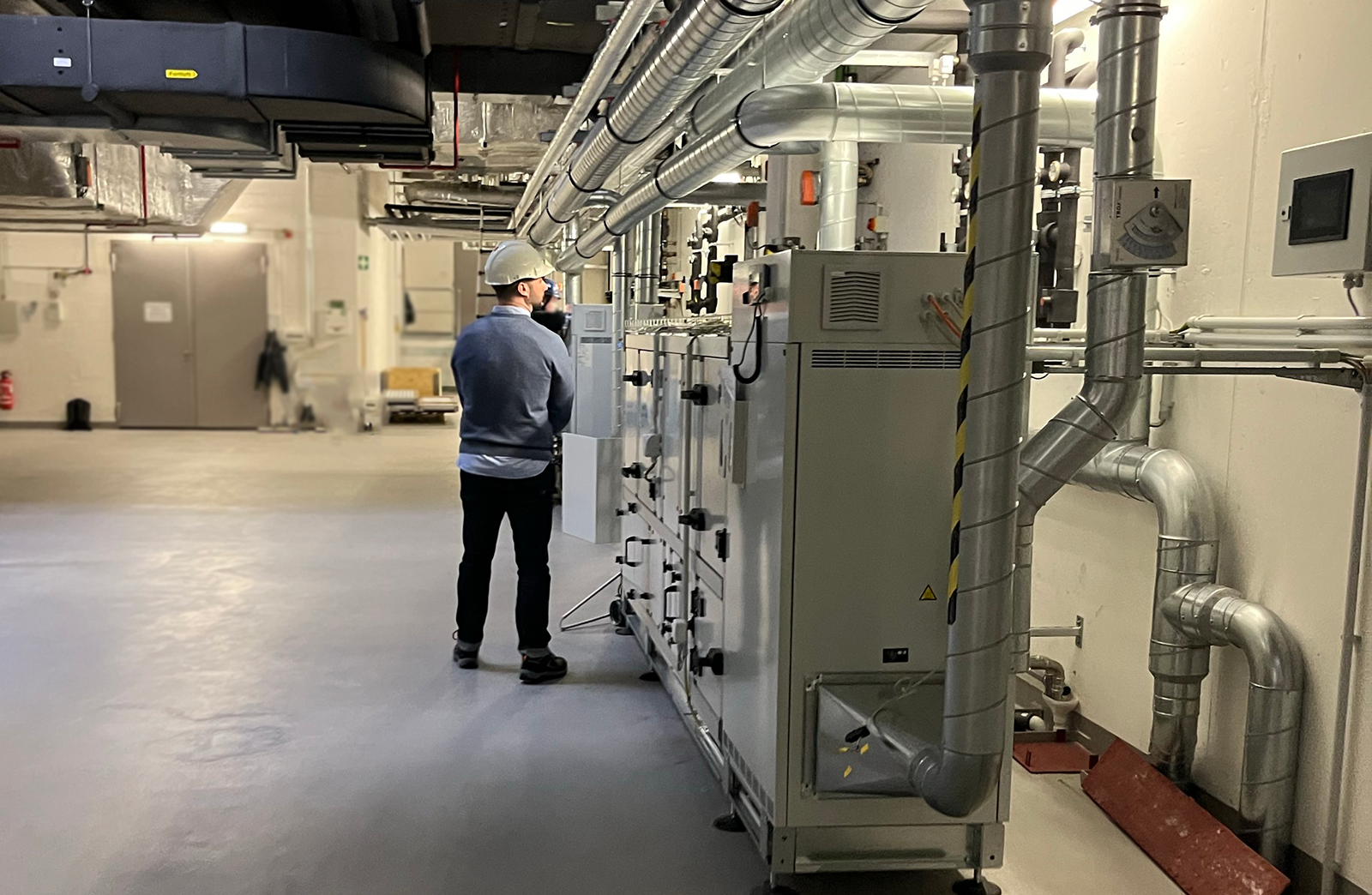
Rather than designing from assumptions, I started by spending four days on-site at 2 manufacturing facilities in Germany, observing commissioning in real conditions, then following up with in-depth internal interviews.
1
Field Visits
2 two-day contextual inquiries at customer sites, shadowing service technicians through commissioning from arrival to handover. Notes, audio, photos, video.
2
Stakeholder Interviews
Semi-structured interviews with a sales engineer and service planner, mapping the processes that happen before and around commissioning.
3
Synthesis
30 pages of notes, 15 pages of transcripts, 30 photos and videos, organised on Miro, coded iteratively, and structured into a multi-stakeholder customer journey map.
4
Mapping
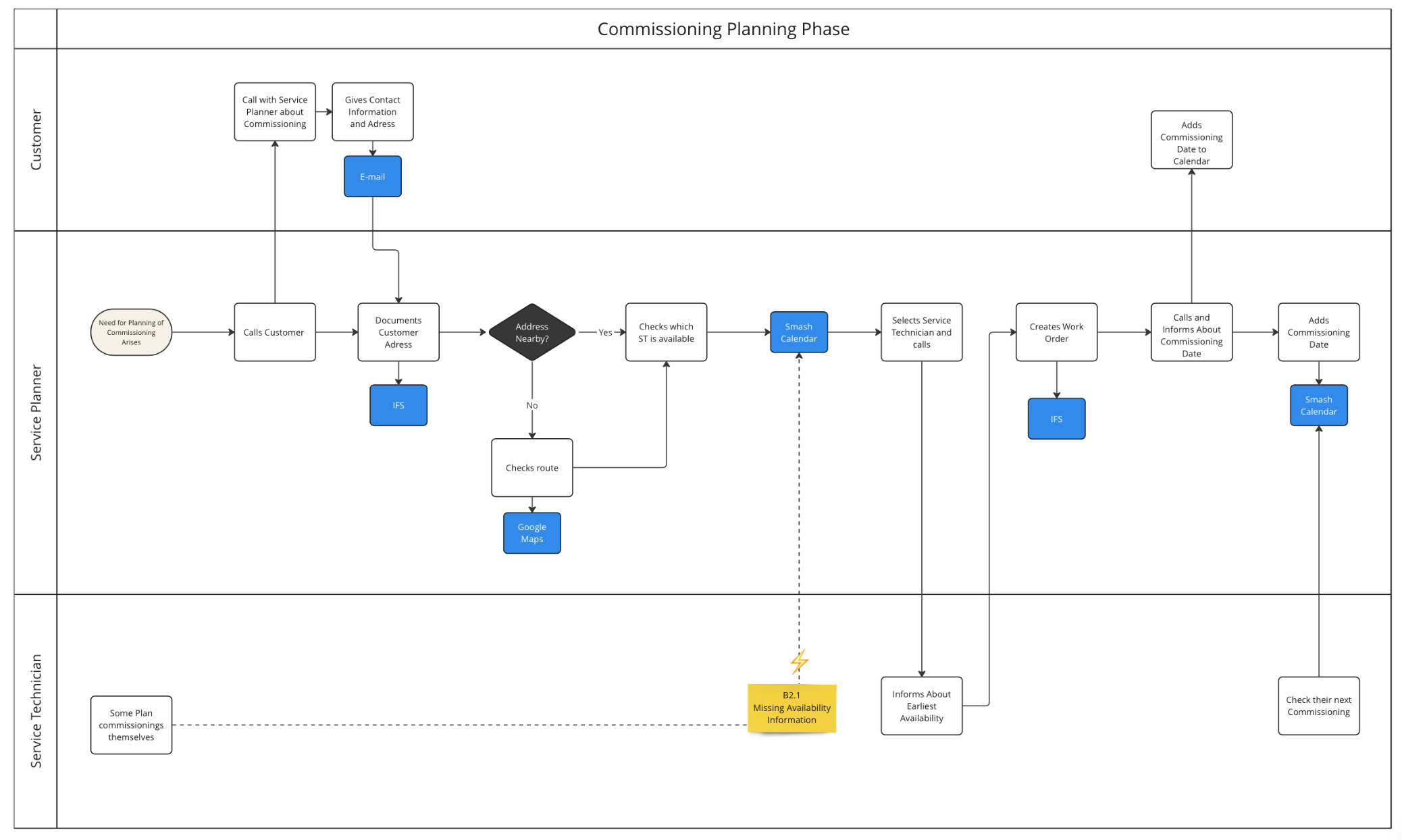
3 swim lane diagrams showing where communication broke down, plus a full artifact ecology map visualising every tool, document, and device in the service technician's world.
KEY FINDINGS
Three communication breakdowns, each with real costs
From 7 identified breakdowns, I selected the 3 most consequential, those with the widest stakeholder impact and clearest design implications.
1
Preparation checklist was unclear
Customers couldn't complete site preparation without calling for help. Service planners had to relay questions to technicians and call back. If preparation was wrong, the entire commissioning was rescheduled, costly for all parties.
2
Availability not in the shared calendar
Some technicians continued self-organising visits without updating the shared system. Service planners couldn't reliably schedule routes, losing efficiency on journeys of up to 4 hours.
3
On-site context was invisible
Unexpected changes at the facility, ducts being opened, equipment moved, silently affected machine performance. With no real-time information channel, technicians were diagnosing machines with incomplete data.
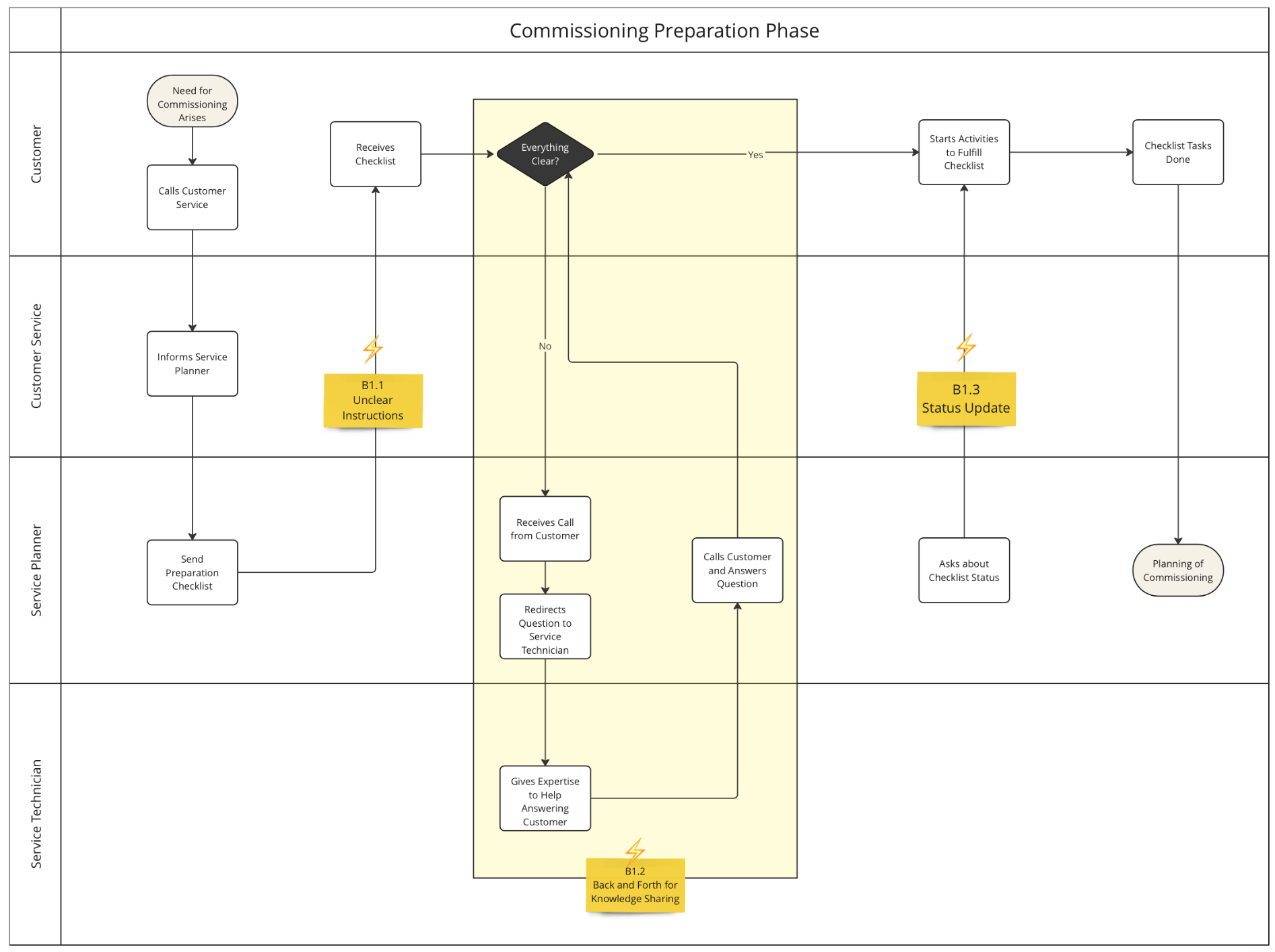
Swim lane showing how B1 unfolds, checklist sent, confusion arises, back-and-forth calls begin
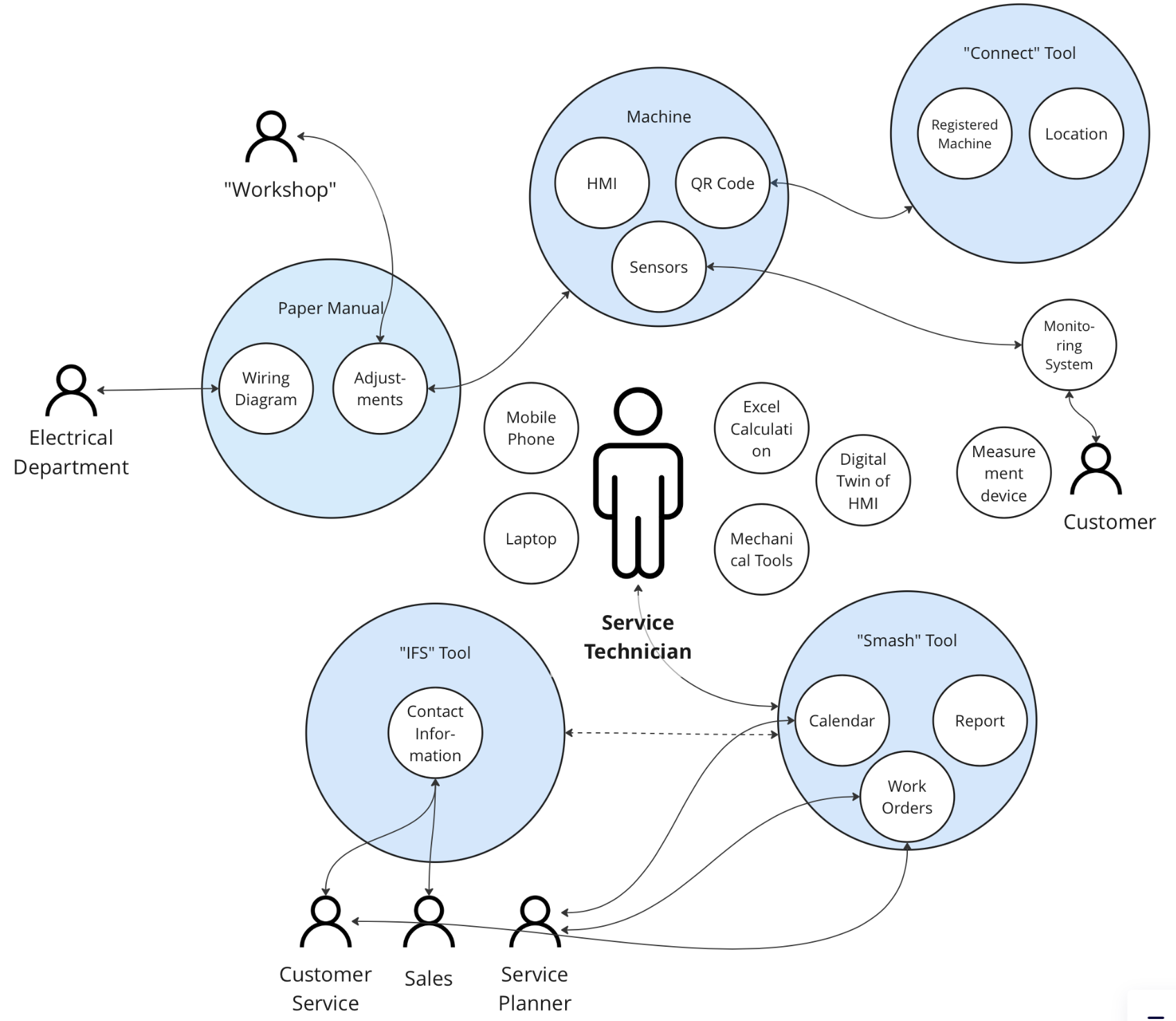
Artifact ecology showing all tools and documents, and the critical disconnection between IFS and Smash
DESIGN RECOMMENDATIONS
From mapping to actionable direction
Based on the findings, 6 concrete design recommendations were developed, each grounded in the mapped breakdowns rather than technology trends.
1. SMART PREPARATION EXPERIENCE
- Replace static email checklist with a digital step-by-step onboarding flow
- Embed a chatbot for customer questions, grounded in machine documentation only
- Reduce back-and-forth calls between planner, technician, and customer
2. UNIFIED CALENDAR AND AVAILABILITY
- Integrate technician scheduling into Outlook, where they already work
- Preserve technician autonomy while ensuring shared calendar accuracy
- Enable service planners to build reliable, efficient routes
3. REAL-TIME SITE COMMUNICATION
- QR code on each machine links all stakeholders to a shared digital log
- Customers, technicians, and facility teams can all add context in real time
- Reduces the black box problem during complex commissioning tasks
4. DIGITAL MACHINE MANUAL
- Replace paper manual with a modular, always-current digital twin
- Workshop customisations automatically update the relevant manual sections
- Tablet-first, matches the mobile, physical nature of technician work
5. GLOBAL COMMISSIONING STANDARDS
- Define shared task sequences to remove inconsistency between technicians
- Software design that guides without removing experienced technician judgement
6. IMPROVED SITUATIONAL AWARENESS IN TOOLS
- Make comments and status visible in Smash, eliminating follow-up phone calls
- Connect IFS and Smash so updates flow both ways without manual duplication